
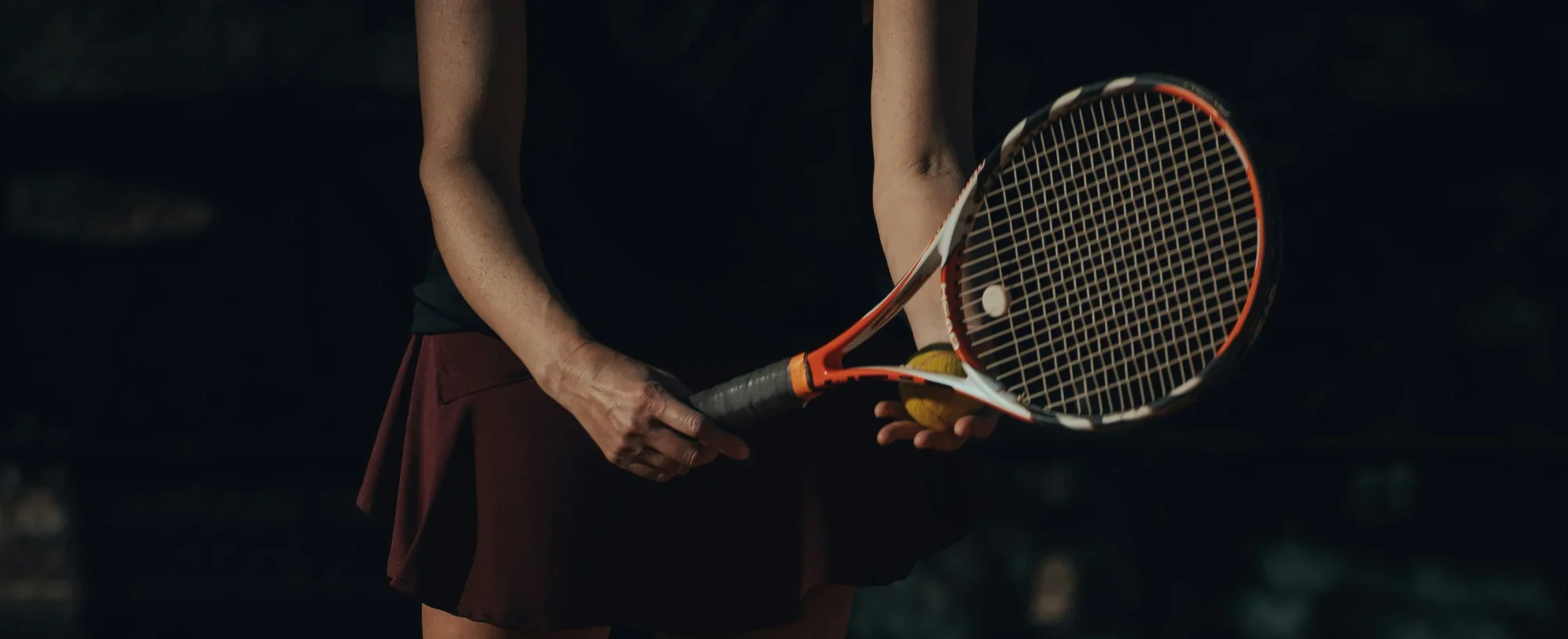

Tennis elbow, or lateral epicondylitis for those who enjoy lengthy medical terms, is essentially your body’s way of telling you that repeatedly swinging a racket might not be as natural as breathing. It’s the inflammation of tendons on the outside of your elbow, specifically where the extensor carpi radialis brevis decides it’s had quite enough of your backhand technique, thank you very much.
The condition affects the tendons that connect your forearm muscles to the bony prominence on the outside of your elbow—the lateral epicondyle. Tennis elbow is usually diagnosed in people between ages 30 and 50, which coincidentally is around the time many of us realise our bodies aren’t quite as indestructible as we once believed.
Interestingly, the ITF estimate that 50% of tennis players will suffer from tennis elbow at some point during their playing career. Professional players, however, rarely suffer from tennis elbow due to their superior conditioning and stroke mechanics, a fact that’s simultaneously reassuring and mildly insulting to the rest of us.
The Culprits Behind Tennis Elbow
The condition isn’t exclusively reserved for tennis players, despite the name. Tennis elbow may be caused by any repetitive movement, including painting, using chainsaws, or even the frequent use of hand tools. Basically, if it involves gripping and repetitive arm motions, your elbow might eventually stage a protest.
In tennis specifically, the main offenders include:
- Poor backhand technique (single-handed backhands are particularly notorious)
- Hitting balls off-centre on the racket
- Using equipment that’s poorly suited to your game
- Playing with old, heavy balls that feel like miniature rocks
- Weak shoulder and wrist muscles forcing your elbow to overcompensate
Can You Cure Tennis Elbow?
The short answer is: it’s complicated. Tennis elbow can be treated and symptoms can be eliminated, but calling it a “cure” might be overly optimistic. It’s more accurate to say you can recover from tennis elbow and take steps to prevent its return—assuming you’re willing to make some changes to your approach.
Treatment Options That Actually Work
Treatment may include rest and stopping the activity that produces the symptoms, ice packs to reduce inflammation, strengthening and stretching exercises, anti-inflammatory medicines such as ibuprofen or naproxen, and wrapping your elbow in a compression bandage.
For more stubborn cases, medical professionals might recommend:
- Physiotherapy and strengthening exercises – Essential for long-term recovery
- Steroid injections – For reducing inflammation when other methods fail
- Shock wave therapy – A newer treatment that helps break up scar tissue
- Platelet-rich plasma (PRP) therapy – Using your own blood platelets to promote healing
- Surgery – Reserved for the most persistent cases (rarely necessary)
The key to successful treatment is addressing the root cause rather than just managing symptoms. This often means examining your technique, equipment, and training habits.
The Rackets That Help Tennis Elbow
Choosing the right racket can make a substantial difference in preventing and managing tennis elbow. The wrong equipment can turn every shot into a minor assault on your elbow joint, whilst the right setup can help absorb shock and reduce strain.
The Science of Elbow-Friendly Rackets
Light and stiff rackets can be very dangerous for your arm as more shock is absorbed to the arm rather than the racket. This might seem counterintuitive—surely lighter is better?—but physics has other ideas. Lighter rackets with insufficient mass to absorb impact vibrations simply transfer that energy straight to your arm.
Key Features to Look For:
Weight: A racket weighing between 280 and 300 grams is ideal for players suffering from this symptom. Use the heaviest racket you can comfortably swing—the additional mass helps absorb shock and reduces the strain on your elbow.
Flexibility: Look for rackets with a low stiffness rating (RA rating below 65, ideally in the 50s or low 60s). A softer frame with a stiffness of less than 65 RA can help to reduce vibrations on ball impact.
Head Size: Larger heads provide a bigger sweet spot and are more forgiving on off-centre hits. The best tennis rackets for tennis elbow have large head sizes, which are more forgiving and feature a bigger sweet spot.
Balance: A racket balanced towards the handle reduces the load on the arm when striking. Head-light rackets offer better manoeuvrability and reduce the stress on your elbow.
Top Racket Recommendations for 2025
Based on current expert analysis and player feedback, here are some standout options:
For Advanced Players:
- Wilson Clash 100 – The Clash blends extreme flexibility with high-end stability and has become renowned for its arm-friendly characteristics
- Yonex EZONE 100 – Delivers controllable power, good feel and an easy-to-use feel with more dampening technologies
- Head Speed MP – Unlike a lot of competitors in its category, the Speed MP does it all with a very flexible beam
For more advanced player options, see our best advanced tennis rackets guide.
For Intermediate Players:
- Head Gravity MP – With its flexible build and Auxetic 2 technology, it delivers the plush feel often reserved for more advanced offerings
- Dunlop CX 400 Tour – Features Sonic Core technology and redesigned beam geometry for enhanced comfort
Check out our complete best intermediate tennis rackets guide for more options suited to developing players.
For Power and Comfort:
- Head Speed PWR – Has an oversized head of 115 square inches, is loaded with power, and features a massive sweet spot
If you’re new to tennis or looking for easier-to-handle options, our best tennis rackets for beginners guide covers lighter, more forgiving frames.
What to Avoid
Certain racket characteristics are particularly problematic for tennis elbow sufferers:
- Stiff frames – Anything with an RA rating above 70
- Head-heavy balance – Increases the load on your elbow
- Very light rackets (under 275g) – Don’t absorb enough shock
- Small head sizes – Increase the likelihood of off-centre hits
Strings and Tension
Your choice of strings can be just as important as your racket selection. Dead strings lose all of their shock absorption and there is only one place that vibration can go – your elbow!
String Recommendations
For a comprehensive overview of different string types and their properties, check out our detailed complete guide to tennis strings.
Best Options:
- Natural gut – The gold standard for arm comfort and feel
- Multifilament strings – Softer than synthetic alternatives and excellent for shock absorption
- Synthetic gut – A reasonable budget-friendly alternative
What to Avoid: Polyester string is one the main offenders for tennis elbow. It is a very stiff and dead string which most club players will never break. If you must use polyester, consider a hybrid setup with a softer string on the main strings. consider a hybrid setup with a softer string on the main strings.
Tension Matters
Too many players string in the high 50s or 60s which is tougher on the arm. Drop your string tension right down to the low 50s. Lower tension allows strings to “pocket” the ball better, providing natural shock absorption.
Recommended Tensions:
- Multifilament/Natural gut: 48-52 lbs
- Hybrid setups: 50-54 lbs
- Synthetic gut: 50-55 lbs
Restring Frequency
Many strings lose most of their performance after 20 hours of play. Regular restringing (every 30-40 playing hours or quarterly, whichever comes first) maintains the strings’ shock-absorbing properties.
Additional Equipment and Accessories
Grips and Overgrips
Make sure you have the correct grip size and that you change your grip regularly. A soft cushiony or tacky grip can make a big difference and prevent you from gripping too tightly.
Grip Size Guidelines:
- Too small: Forces you to grip tighter, increasing forearm strain
- Too large: Reduces racket control and can cause fatigue
- If between sizes, choose the larger option
Recommended Overgrips:
- Tourna Grip (tacky, absorbs moisture)
- Wilson Pro Overgrip (cushioned feel)
- Head Super Comp (soft, comfortable)
Vibration Dampeners
Whilst the jury’s still out on their effectiveness, vibration dampeners can reduce the harsh “ping” feeling and may provide some psychological comfort. They’re inexpensive enough to be worth trying.
Tennis Elbow Straps
Tennis elbow support straps could be worth trying out. Feedback has been mixed from some players, but they might work for you. These counterforce braces apply pressure to the forearm muscles, potentially reducing strain on the elbow tendons.
Popular Options:
- Aircast Tennis Elbow Strap
- Futuro Tennis Elbow Support
- Bauerfeind EpiTrain (more expensive but well-regarded)
Ball Quality
Old and dead tennis balls can be a real killer for your arm. Some of them feel like rocks! Always use fresh balls when possible, and consider pressureless balls for practice sessions as they maintain consistent bounce longer.
Prevention is Your Best Defence
Technique Improvements
Poor technique is often the underlying cause of tennis elbow. Any off centre hits can increase your chances of doing damage to your elbow as more vibration is transmitted to your arm.
Common Technical Issues:
- Hitting balls late or off-centre
- Over-gripping the racket
- Poor body positioning
- Inadequate use of legs and core for power generation
Consider working with a qualified tennis coach to address technical deficiencies.
Fitness and Conditioning
Professional players rarely suffer from tennis elbow partly due to their comprehensive strength training programmes. Focus on:
- Forearm strengthening exercises (the Flexbar is particularly effective)
- Shoulder and wrist stability work
- Core strengthening
- Proper warm-up routines
Playing Habits
- Warm up properly before playing
- Gradually increase playing intensity rather than jumping straight into competitive matches
- Take breaks during long hitting sessions
- Listen to your body – don’t play through elbow pain
When to Seek Professional Help
Call your healthcare provider if you have pain or trouble moving that affects your daily activities, pain doesn’t get better or it gets worse with treatment, or you see a bulge or lump on your arm.
Early intervention is crucial. What starts as mild discomfort can quickly escalate to chronic pain that significantly impacts both your tennis and daily activities.
The Bottom Line
Tennis elbow is frustrating, painful, and surprisingly common, but it’s not a life sentence. With the right combination of equipment, technique work, and sensible training habits, most players can return to pain-free tennis.
The key is taking a comprehensive approach rather than looking for a single magic solution. Your racket setup can make a significant difference, but it works best in conjunction with proper technique, appropriate conditioning, and listening to your body’s signals.
Remember, the goal isn’t just to play through pain—it’s to play better, longer, and more enjoyably. Sometimes that means making short-term adjustments for long-term benefits. Your elbow (and your tennis game) will thank you for it.
Always consult with a healthcare professional for persistent elbow pain. This guide is for informational purposes and should not replace proper medical advice.
Read More
Looking to complete your tennis setup? Check out these essential guides:
- Best Tennis Shoes – Find the right footwear to support your game and prevent lower body injuries
- Best Tennis Bags – Keep your arm-friendly gear protected and organised with the perfect tennis bag